Scoot Networks owns and maintains an online network for sharing electric scooters. Its fleet comes with a helmet and a built-in GPS navigation system. As a user, I felt that the service was underutilized in San Francisco, especially at the time of a profileration of rideshare companies. In addiiton, as someone who rode scooters growing up, I wanted to understand why users preferred Scooters as a viable alternative to other mediums for commuting. Finally, I had hoped to identify opportunities for growth for this service as a part of a 12-week long individual project for the UX Design class at UC Berkeley.

Role — Solo UX Designer (with mentor guidance)
Duration — August 2018 - December 2018 (4 weeks)
Scope — Research, design systems, visual design, prototyping, user testing
The audience of Scoot is predicably Urban Core (especially given that they were only avilable in San Francisco) for their last mile ride, courier services to be delivered as well as getting around town for fun. I had hoped to atleast interview 2 of these 3 segments.
As a first step in understanding the problem space, I conducted a teardown of the product.
I applied a few of the principles of the cognitive biases around from Mental Notes app. Some of the potential biases that surfaced include: framing, certainty and peak-end rule.
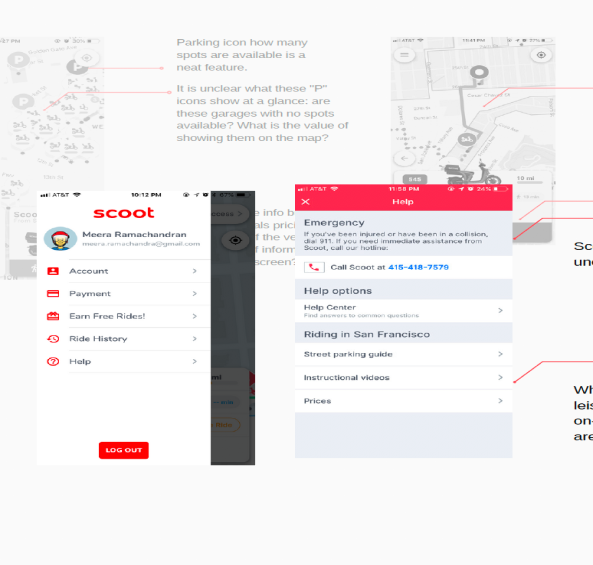
Framing: While the info card is glanceable, it would be great to better highlight the features available - i.e. helmet (safety) / USB port.
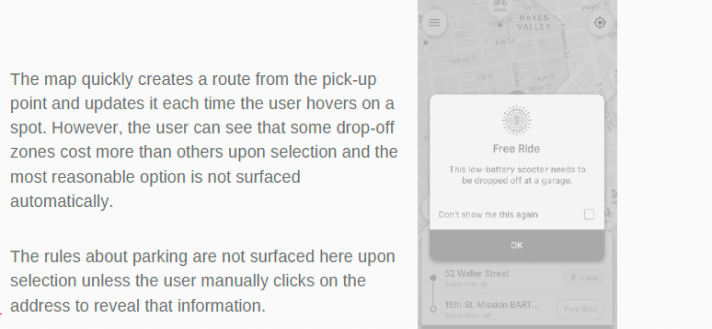
Certainty: If a user is unfamiliar with the location, the drop-off zones can be confusing as they are not clearly displayed. Some drop-off zones cost more than others depending on time of day and the most reasonable option is not surfaced automatically. No instructions for vehicles with low charge/ street cleaning zones.
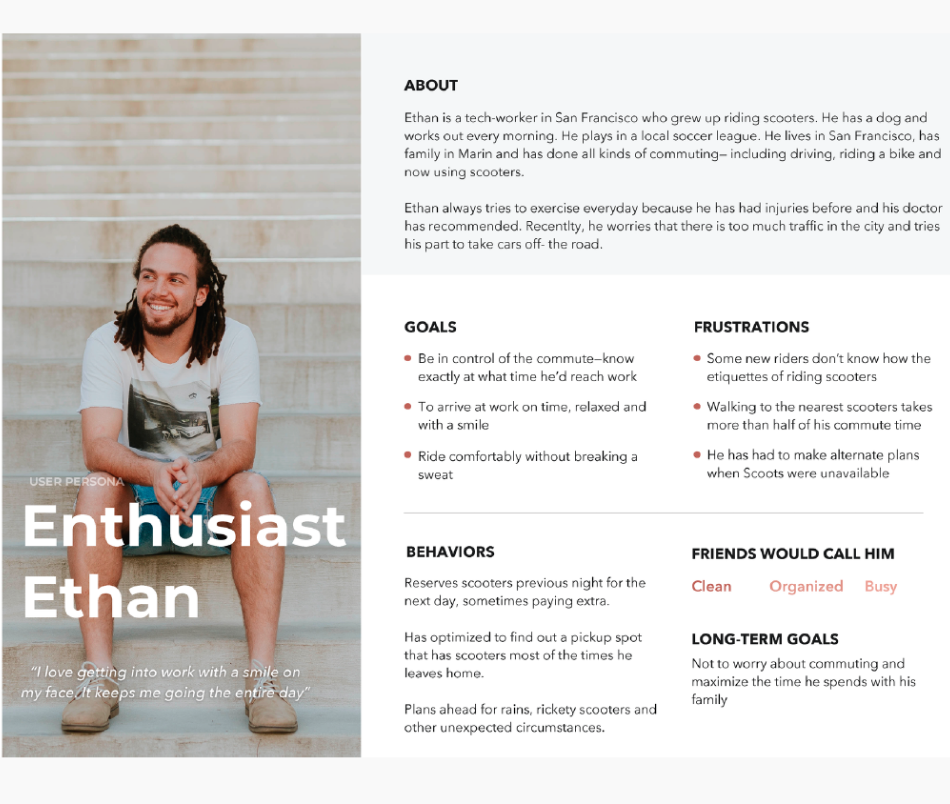
Two distinct personas with varying needs: a recent customer, who uses scoot for exploration as well as an experienced rider, who uses scoot for commuting.

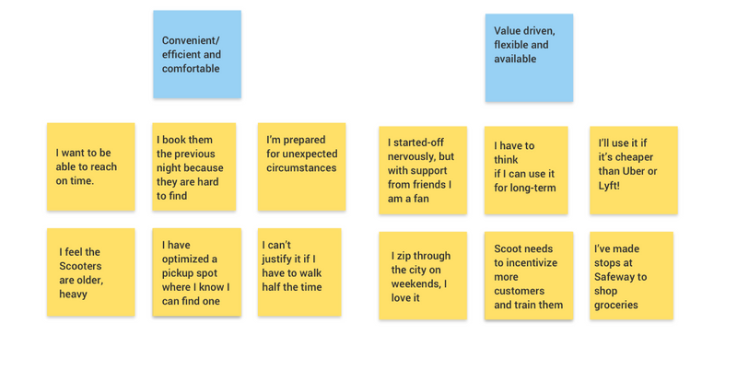
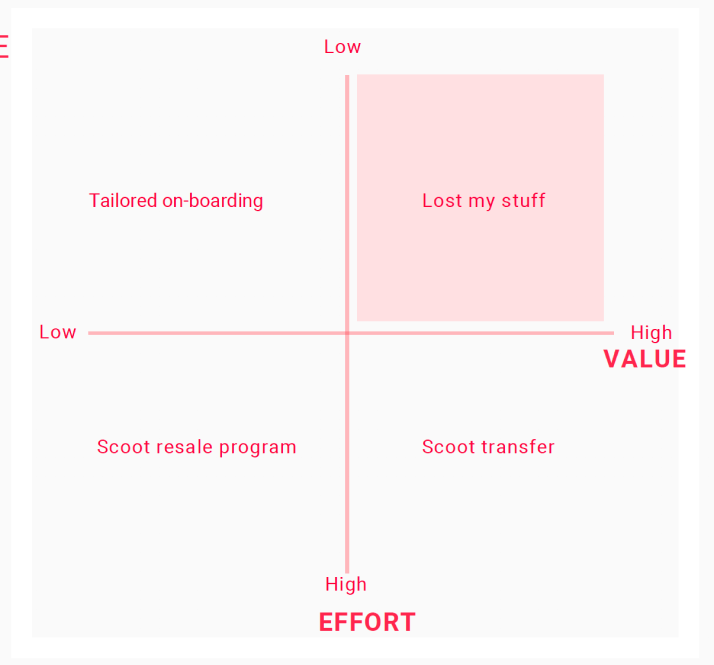
A lot of themes and opprtunities for improvement were discovered during research, such as Tailored onbparding, resale program, Scoot swap, and Lost my stuff.
I left my expensive sunglasses in the cubby and luckily was able to retrieve it because I was able to reserve the same Scoot for the next ride.

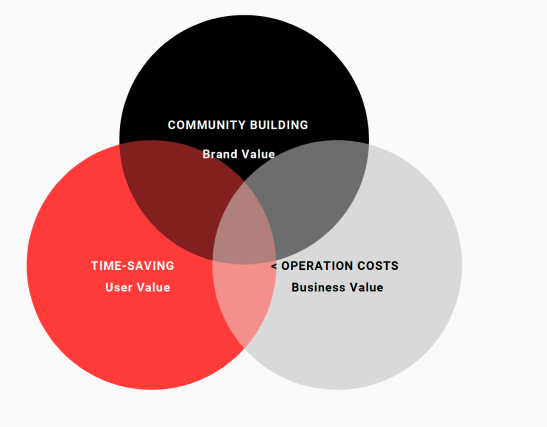
After getting feedback from my mentor and several others on the the potential for increase brand value, user value and business value, I chose "Lost my stuff", because of higher value to the customer experience helps build brand loyalty, and is as well as a challenging problem with social psychology and trust in the digital world.
I sketched out flows from the perspectives of a reporter as well as the item-seeker.
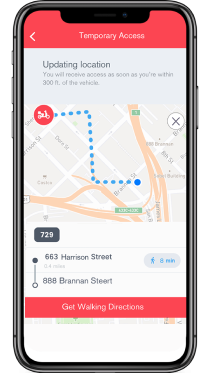
To alleviate the immediate needs and reward people, I offered to unlock the vehcile by means of a temporary access code for 3 minutes, at which time the item-seeker can access and enter the vehicle.
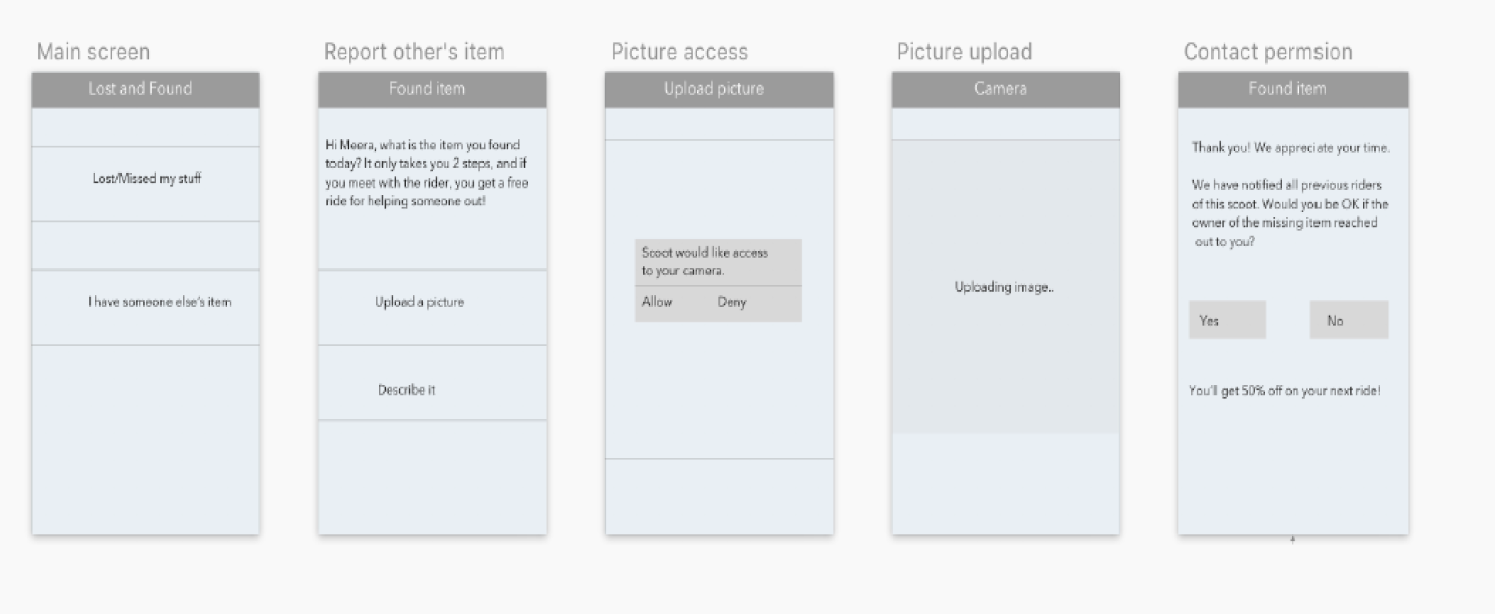
From the perspective of an item-reporter, the main goals were to make it the least intrusive experience.
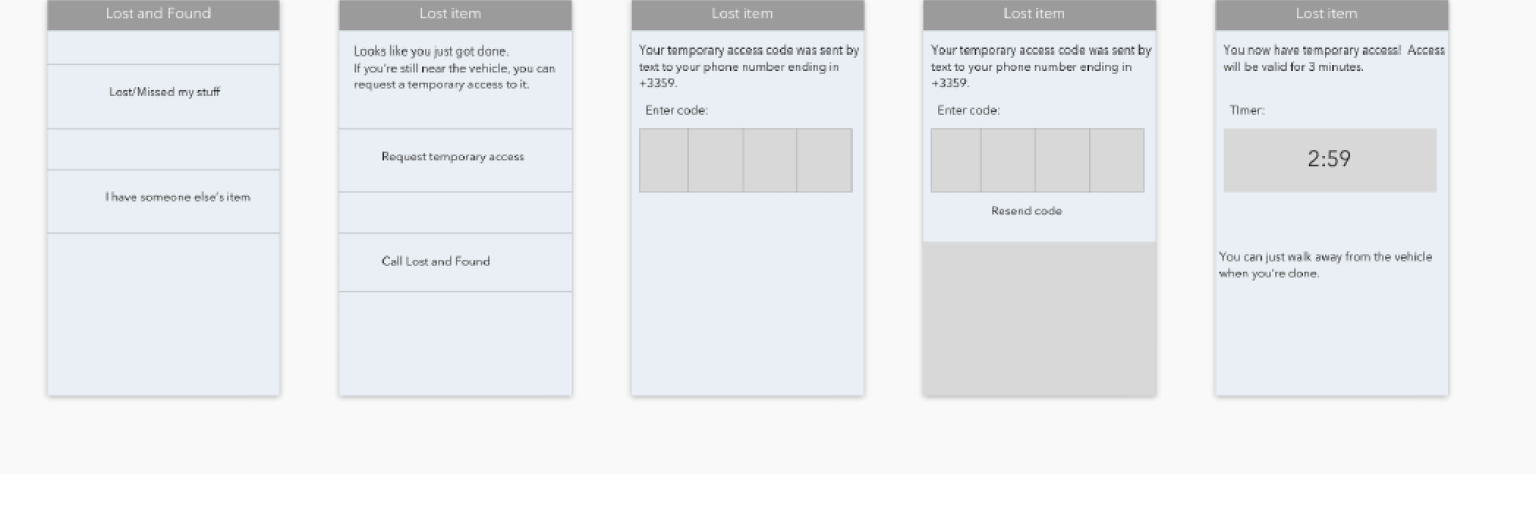
After mapping out the early flows, I conducted research with users on two scenarios: 1. Get help on retrieving a a lost item 2. Log a found item. Some of the major learnings in these areas include:
Conditions in which people can get temporary access need to be explicit. For example, what happens if you're beyond 300 ft.? If a certain time limit has passed, say 24 hours, how can they get help?:
Motivation for taking an action of reporting the item is usually low. Upon further syhtesis, I also learned that customers are not comforable with being contacted by the person who misplaced the item. As a way to ensure the experience scales while lowering costs, I proposed to place lockboxes in parking garage locations. This way, items can be retrieved by employees on charging runs.
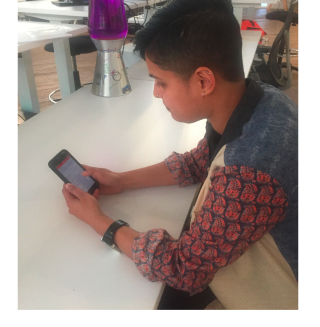
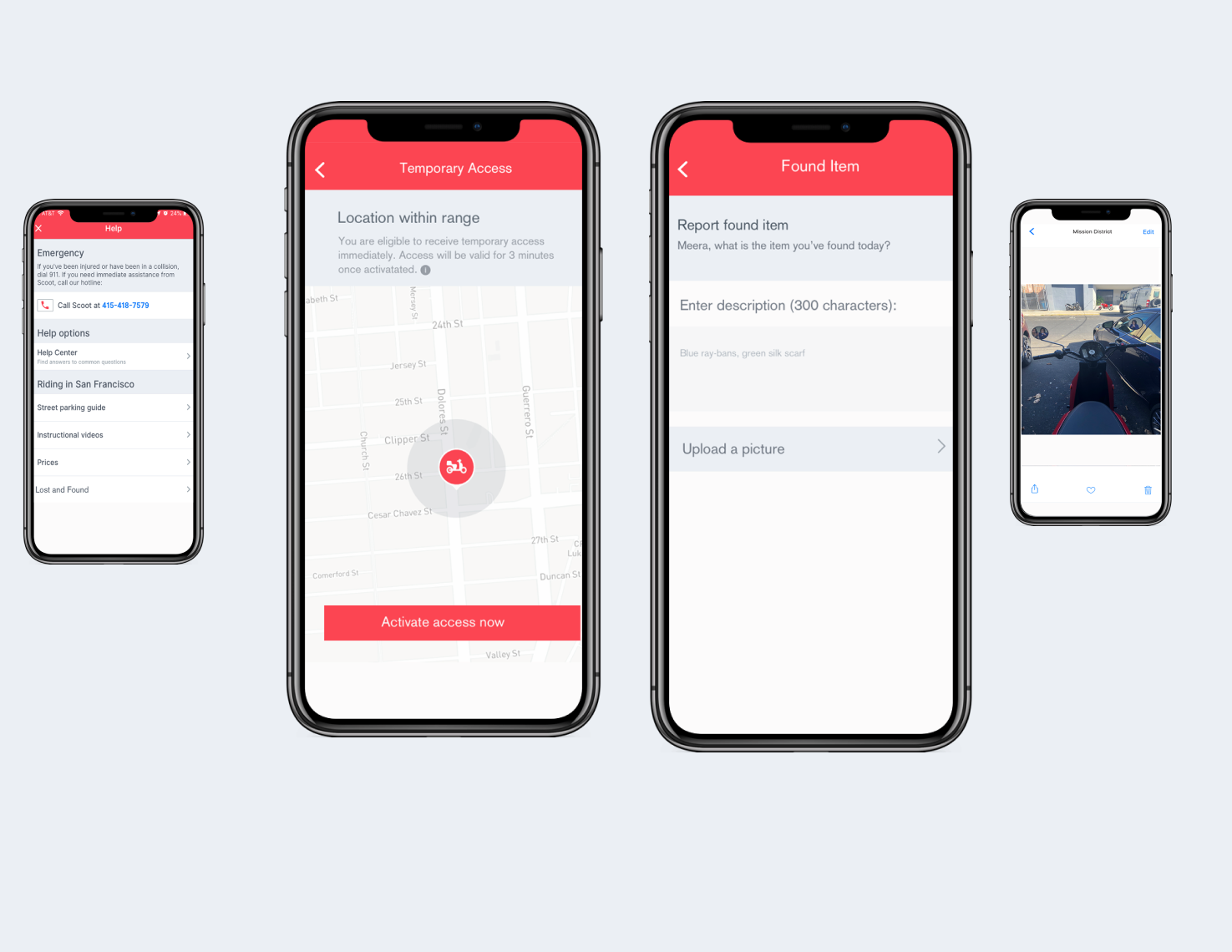
As for recognizing the lost item, there could be 2 use cases: 1. User immediately recognizes the missing item 2. More than 15 minutes have passed since the return.
Note: I picked 15 minutes because that is the time between reservations allowed by Scoot.
As for the first case, when the user recognizes immediately, they are quickly taken to a friendly, professional and trustworthy language that allows for quick resolution of issues on the user side.
For use case 2, the lost and found mode is only shown in the first 10 minutes of the reservation window. This is to prevent any mode is not available to the user.

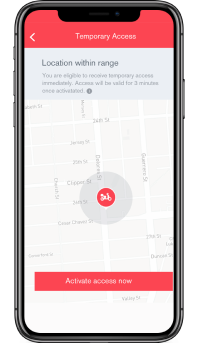
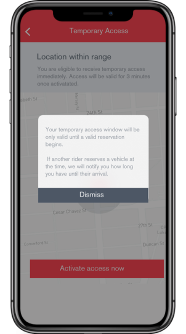
When the user recognizes a missing item quickly,they are able to activate the access mode without any trouble. Wehn the mode is activated, there is also a clear, proactive notification for the user that others may still be able to book the ride.
Options to get walking directions are available in case the user is not very far. Once the user has walking directions on, Scoot will guide users through the route. However, if it is more than 10 minute walk (estimated), the app will display a notification that the vehicle may still be reserved. This will help users like Valerie to accomplish the task without any problems.
A critical flow in this service is the ability to upload a picture and optionally deposit the item in the garage. I chose to include multiple options for the users who are time-crunched, yet can seamlessly handle this if the need to, directly addressing the needs of Ethan who values convenience.
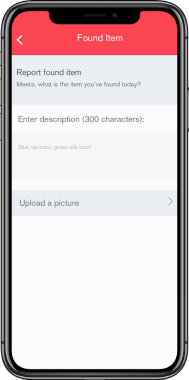

At then end they are offered a free ride to drop off the item in a nearby garage lockbox as an incentive to contributing to the community.

After research, I discovered that while there was a lot of thinking that has gone into crafting the reporter’s experience, the foundation of the experience still remains that the person who lost the item is still able to get immediate help and feels heard. User testing feedback indicatd that this is a time-saving feature that wil greatly reduce anxiety and improve goodwill and additional engagement.
Designed and hand-coded with ♥️ Meera Ramachandran © 2021. Built using Simple Grid. Deployed with Netlify.
